Monday, June 24, 2013

A Tribute to Tamanu Oil~


INFORMATION BROUGHT TO YOU BY: 
Tamanu Tree Calophyllum tacamahaca


 The Tamanu tree, Calophyllum tacamahaca is indigenous to Southeast Asia.  Found throughout Thailand, Vietnam, Myanmar, Malaysia, India, Sri Lanka and Polynesian islands.  This slow growing evergreen tree can exceed 30 meters tall (over 90 feet) and is part of the Mangosteen Family.  The oil derived from the nut of this tree has been used topically as far back as history can date. Growing both coastally as well as inland with equal vigor, it is interesting to note that the natives of this region consider the trees growing close to salt water to be the ones with the most potent medicine.

Tamanu Fruit

Flowers of Tamanu Tree


The Tamanu tree (pronounced TAW-man-oo) has been considered a sacred gift by the natives of Southeast Asia.  It has been said time and again that "the God's hide within it's branches."  This beautiful tree flowers twice annually, yielding white fragrant flowers which later bring about clusters of yellow fruit.  The fruit has a similar taste to an apple and embedded with in the meat of this fruit lies a kernel (also called a punnai in some areas) which houses all of the delicate Tamanu oil.


Punnai or Kernal of Tamanu tree

Tamanu Oil also called foraha or doomba (no-pain) oil, is processed from the kernels harvested from the Tamanu tree.  Once the nuts are collected they are allowed to sit and dry in the sun for approximately 2 months of time. During this time of waiting, the kernel it's self becomes dark and sticky with the thick rich oil. It is crucial while drying that the nut is protected from both humidity and rain.  Then each nut is separated from it's shell and ground down into a pulp.  Through the pressing and grinding process friction does occur, but it is imperative that the temperature does not exceed 120 degrees F (49 degrees C) for the oil to be considered "cold pressed".  It is the cold pressed oils that maintain the integrity and the healing properties originally bestowed up on this plant. It takes 100 kilograms of Tamanu fruit, approximately the amount that 1 tree produces annually, to produce just 5 kilograms of this oil (approximately 220 pounds of fruit compresses into just under 11 pounds of oil).


Prepairing the Fruit to Make Tamanu Oil

 Traditionally this oil has been used throughout Southeast Asia to aid in the healing many different disorders of the skin and nervous system.  Almost always used as a topical aid or an single ingredient for these said ailments;  abrasions, acne, blemishes, blisters, body odor, burns, diabetic sores, diaper rash, dry skin, eczema, herpes sores, insect bites and stings, neuritis and neuralgia, psoriasis, rheumatism, sciatica, shingles sunburn and wrinkles.

In the early 1900's Tamanu Oil made it's first debue in the Western World.  A French nun by the name of Sister Marie Suzanna, had used tamanu oil to treat symptoms of leprosy with quite remarkable effect.

In 1918 researchers for the French Pharmacopoeia began to look deeper into the topical use of Tamanu Oil.  The scientists were immediately awed by the cicatrizing effects, the ability of this oil to regenerate skin cells and tissue.  There are many stories to be found in the French medical literature from the turn of the century stating the remarkable healing benefits of this prized oil. 


Cold Pressed Tamanu Oil
Tamanu oil should have a rich deep earthy scent and present in a dark greenish gold color.  This oil has a remarkable ability as a topical healing ingredient.  It is antibacterial, antimicrobial, anti-inflammatory, anti neuralgic (nerve pain), and filled with antioxidant properties. It also contains a unique  fatty acid called calophyllic acid and a non steroidal anti inflammatory agent called calophllolide.  Tamanu contains coumarins which are another potent anti-inflammatory agent.     Tamanu oil contains 3 essential classes of lipids (fats): neutral, glyco- and phospholipids.  Over all Tamanu oil is wonderful for scar tissue reduction, and in any case where regeneration of skin cells is needed.  Over an 8 week period, daily application of Tamanu oil to stretch marks and other scars has been seen to reduce the visibility, color and depth of scar tissue. It can be used as a night application to fine lines and wrinkles with great success to it's users.  This makes a wonderful ingredient to a night cream or under eye serum.  Always look for cold pressed, organic and preferably fair trade labeling.


*The information found within these blog posts is brought to you by Recherch'e Organics.  The owner of this small batch bath and body care company is a trained Mater Herbalist, Holistic Nutrition Consultant and a Certified Holistic Health care Practitioner.  Many of these wonderful natural ingredients are used in our product line currently or are being considered for future products of Recherch'e.  For more information or to buy from Recherch'e Organics; Please visit our website http://www.rechercheorganics.com  or follow us on facebook for many great deals and information and through BEAUTIFUL YOU (this blog).
Thank you for reading,

Truly,

Hillari Ladd MH, NC, HHP

Monday, May 27, 2013

Prodigal Pomegranite (seed oil)

Punica granatum (pomegranate tree)

The Pomegranate tree is native to Asia and throughout the Middle East.  This tree and it's prized red globe-like fruits have been cultivated by humans for food, medicine, and beauty since ancient times. Like many fruit trees, it takes the pomegranate tree approximately 3 years to begin bearing fruit, and once reaching maturity (around 10-15 years after planting) 500 or more fruits can ripen in a single growing season.  Typically pomegranates are found to be "in season" from late September to February in the Northern Hemisphere and early March through May in the Southern Hemisphere. These trees are naturally drought resistant however the most fruit comes from trees that are watered in regular intervals.

Harvest Time
Only the best fruit is sold as fresh whole fruit, the remainder of each harvest is set aside for juicing and turning into pomegranate seed oil.  What is left after juicing is often fed to cattle and other livestock animals in the region.  There has been a spike in demand for both pomegranate juice and the precious oil that resides with in the seeds over the last 5-7 years.  The United States and Europe are the number one consumers of pomegranate products in the world. Did you know that it takes over 200 pounds of fresh ripe pomegranate fruit to make just a single pound of its precious seed oil?

Pomegranate Seeds

Why is the oil of this delicious and beautiful fruit so sought after?   This soft amber liquid holds fast to its origins and carries along with it a slightly fruity odor. It is a highly nutrient dense oil that can be used both internally as well as having many external uses.  Pomegranate seed oil is rich in the rare Omega 5 essential fatty acid (not nearly as well known as its counterparts omega's 3, 6, and 9).  In fact pomegranate seed oil is the only known botanical source of Conjugated Linolenic Acid CLnA, also known as Punicic Acid.  Punicic Acid is one of the most potent antioxidants currently known. This little beauty also falls under the category of a natural plant based estrogen (phytoestrogen).  The molecular structure of this particular fatty acid makes it very easy to be absorbed and used by our skin. It works in a way that helps bring other nutrients directly into the skin cell.  And when our cells have proper nutrition this in turn accelerates the process of healing and rejuvenation. Pomegranate seed oil contains many vitamins and minerals that are also beneficial to our skins health and well being. For example vitamin B1, B2, vitamin C, potassium, and magnesium are all found with in.  In studies it is showing that this lovely little oil has much to contribute to our skins vitality.  It creates firmer more supple skin by improving elasticity, balances skin pH, has anti inflammatory properties, and leaves no greasy residue on the skins surface.  It helps unify color and overall tone of facial skin by lightening hyperpigmented areas. It is moisturizing and a known natural preservative, it protects our skin from free radicals and is even said to prevent and help destroy the formation of caner cells when applied topically to sun damaged skin.


Add caption


What do you know about pomegranate seed oil? do you currently use it internally? Externally? Please share, we would love to know your thoughts on this recently very sought after oil.

Information brought to you by: RECHERCHE ORGANICS
http://www.rechercheorganics.com


Tuesday, April 30, 2013

Candid Interview with Kokum Butter...

Native and Naturalized Home of Kokum Tree


Garcinia indica  Tree and Maturing Fruit
Kokum trees are grown throughout Africa, India and beyond.  Garcinia indica  is a tropical evergreen tree that grows to a height of 50 or more feet.  Found in both wet and relatively dry regions, this tree is mostly wild and when cultivated it is done only on a very small scale.  Kokum trees do not require irrigation, spraying of pesticides or fertilizers due to the fact that they are naturalized to this region of the world.  Early in the year, Kokum fruits are tender and green, ripening to a deep reddish purple as harvest time nears. These precious fruits are in the height of harvest through out April and May of each year.

A Spice, A Drink, A Dye, A Medicine, A Beauty Secret and More
A single tree can bear hundreds of fruits annually that are used to flavor traditional food dishes, make an antioxidant rich drink (kokum sherbet), and used in cooking as an edible vegetable fat.  A butter is also rendered from the kernel of the fruit that has long been used in treatments for both skin and hair.

Fruit From the Kokum Tree
The fruits are picked upon ripening.  The outer skin is removed and the seeds and skin are dried separately in the sun.  The harvesting of Kokum (butter and other products) is almost solely a cottage industry. As there are no regular Kokum orchards anywhere. Kokum butter is rendered when the kernals inside the fruit are dried.  They are then crushed into a pulp and put into boiling water.  The vegetable fat is skimmed off the top as it slowly boils out. The Kokum butter is then put into a clean vessel, ran through a cheese cloth (or by some other means of straining out plant debris). As it cools it also begins to harden.  Kokum butter when left at room temperature is one of the hardest vegetable butters know to man. It's melting point is between 99 and 104 degrees F (38-40 C) but melts well when in contact with skin. 

Kokum Butter
Kokum butter is a very good antioxidant (combatant of free radicals).  It is rich in citric acid, hydroxicitric acid, malic acid, polyphenols and acetic acid.  Also containing garcinol, vitamin B complexes, potassium, manganese, and magnesium.  What does this mean for our skin?  This butter is a very emollient off white butter.  Naturally it has much less natural odor than coco butter or other vegetable butters. It is rich in essential fatty acids (omega's 3, 6, and 9).  These EFA's  aid in cell oxygenation and are more bio available for our bodies, meaning it is easier for our skin to accept the nutrients than from many other natural butters.  The vitamin E found in Kokum butter aids and supports skin elasticity and flexibility of the cell walls.  This wonderful butter has the ability to soften and heal chapped and cracked skin of the lips, hands and soles of the feet.  Kokum butter has been used in Traditional Ayurvedic medicine (the healing art form through out India) for thousands of years.  They have used it in healing skin ailments such as rashes, burns, skin allergies, as well as an aid in the reduction of fine lines and wrinkles, chapped, dry skin, as an aid to improve the hydration barrier atop the dermal layers of skin.  This butter has always been seen as the best option for sensitive skin.  It is non-comedogenic (non pore-clogging) making it suitable for use on the face and other acne prone areas.  It is a wonderful addition to many cosmetics though very rarely used in products in the United States.

FOR MORE INFORMATION OR A PLACE TO BUY KOKUM PRODUCTS, PLEASE VISIT US AT http://www.rechercheorganics.com  and  find us on facebook!

We carry multiple products with Kokum Butter:
      Organic Goats Milk and Kokum Butter Soaps of all scents
      Whipped Shea Butters (with the addition of Kokum Butter)
       Lip Savvy Hydrating Lip Balms
       And More...

Monday, April 22, 2013

Savvy to Seaweed...

 Seaweed is another of our worlds age old beauty secrets.  A food source, a medicine chest, and an  advocate for beauty and vitality anchored into another world, not inhabited but often visited by humans.  Pelagic seaweed (meaning living at sea, growing independently of land) has been used by coastal villagers for food, medicine and beauty since the dawn of time.


Seaweed Harvest
Seaweed Harvest
Seaweed Harvest


Seaweed has been harvested by hand and sun dried world over for century upon century. Harvest methods have included leaving a couple of inches of plant attached to its parent rock or surface, which in turn allows faster regrowth. Only today, with increased demand on sea vegetation do we begin to see unsustainable practices with seaweed harvesting occur. Prior to the last 50 years, seaweed was harvested on a much smaller scale.  Allowing the forests below the waves time to regenerate and propagate.  Today there are companies touting 100,000 tons of commercially harvested sea vegetation annually.  Poverty stricken coastal towns have offered jobs (even here in the USA) mechanically harvesting 6 tons of seaweed per day at a pay rate of $25.00/ton.  There are companies that vacuum harvest certain seaweeds such as Irish Moss, with serious threats to both the ecosystem as well as huge numbers of by-catch of other fauna.

Seaweed Farm in China
 Thankfully though, there are sustainable seaweed farms happening around the globe.  People have found different ways to create surfaces that seaweed attaches to easily and harvest and re-harvest as one would take lettuce leaves  from a home garden.  Taking some fronds as they reach maturity and leaving the rest to continue growth.


 There are hundreds and hundreds of varieties of seaweed world over.  It is found in every ocean across the globe.  These plants draw an incredible amount of minerals, micro and macro nutrients from the water that surrounds them.  Some seaweed have a mineral content of up to 36% of total dry weight!  They have Vitamins A, B's (1, 2, 3, 6, and 12) , C, E, D, K and Folic Acid.  Over 60 trace minerals such as flourine, calcium and magnesium are found hidden within their leafy fronds. B vitamins are known for protecting the skins surface and helping reduce inflammation.  Flourine, calcium and magnesium restore radiance to the skins complexion. It is full of lipids, proteins, which are easily absorbed to moisturize and nourish the skin.  This helps to maintain firmness and deep seeded hydration of the dermal layers. There are many amino acids and enzymes present in seaweed that are potent anti oxidants, fighting off free radicals and working to promote tissue regeneration and elasticity.  Algae's and Seaweeds are a superfood for the skin. Ultimately skin is made healthier by simply using this ingredient.

Brown Algae
BROWN ALGAE:

Brown Algae has a chemical component called Citrinol that has been found effective in fighting against gram-positive bacteria, including bacteria associated with acne and acne inflammation.  It helps boost collagen production (which works hand in hand with elastin) one of the major components in keeping skin firm, youthful looking and wrinkle free.


Green Algae
GREEN ALGAE:
Green Algaes work wonders with dry, irritated and edematous skin due to over exposure to the elements.  It has detoxifying and antiseptic properties and is found in numerous skin benefiting personal care items. It's anti-inflammatory properties make it a wonderful ingredient for sensitive skin, and this group of algeas in particular have great natural propensities to reducing redness and excessive irritation.


Red Algae
RED ALGAE: 
 Red Algae is the best of all the algae types for drawing out impurities and toxins as well as  regulating oil levels of your skin.   When applied topically, Red Algae draws out toxins and helps the skin absorb some of its many nutrients.


SEAWEED: restores moisture levels, revitalizes and firms skin, nourishes, oxygenates and detoxifies skin, balances oil levels, cell generating, purifying, improves skin texture and tone, makes hair shiny, cleanses, soothes, slows skin aging, restores micro and macro nutrients to the skin.


 DIY SEAWEED BATH: 
Get dried seaweed in bulk from your store; Kelp and Dulse are both great options but any kind of seaweed will work.  10 lbs of wet seaweed dries out to 1 lb of dried seaweed.  Online sources may be another great place to purchase bulk seaweed from.  Twenty dollars will give you 5-6 baths worth of plant material.

add 3-4 oz of seaweed mixture (or single type) to a muslin bag, cheese cloth or some other enclosed bag that will allow the nutrients to seep out and into your bath water.  (3-4 oz is approx 2.5 lbs of wet seaweed). Keeping it enclosed will make clean up after bath time much simpler.

Allow your self 20+ minutes to soak in this nutrient rich water.  For something a little extra add a couple of drops of your favorite essential oil to the water, sit back and relax.

This and more from the head soap maker at RECHERCHE ORGANICS.  Master Herbalist, Holistic Nutrition Consultant, Soap Maker extrodinaire...

http:///www.rechercheorganics.com

Monday, April 15, 2013

The Aloe Appeal~


Aloe barbadensis miller
 Aloe vera, a spiky, green, succulent plant that many people have at least some familiarity with.  It is in homes and planter pots through out the world.  Found in outside gardens in warm climates and growing wild from Africa to India, Hawaii to Mexico.   This plant originated in Africa but has naturalized to many places through out the world. Its name derives from the Arabic word "Alloeh" meaning "shining bitter substance", and "vera" in Latin means "true".  It has been deemed a plant of great substance throughout the world for centuries uncounted.  Greek scientists regarded the Aloe plant as a universal panacea.  The Egyptians called Aloe "the plant of immortality".  Today, much as in the past, Aloe is known for its health, beauty, medicinal and skin care properties.

Manual Methods of Extraction
An Aloe "Plant"


 As with many things, in the past Aloe was harvested and extracted solely by manual means. Today, out side of very small operations, it is commercially prepared by mechanical methods.
Traditionally, workers harvested only the mature leaves near the base of the plant.  The tip and bottom of each leaf were cut off and the rest of the leaf was placed on end in a container so that the aloe latex, a bitter sap like substance, could drain out.  Then the outer portion of the plant was skinned off revealing the clear gel inside.  This gel was scraped out, crushed and pulverised by hand, filtered and put into the storage containers.  Today, there are two different main methods of extraction.  Whole leaf preparation begins with harvesting and washing the entire leaf, which is then crushed, ground, or pressed (depending on machines).  Then this mixture is "cleaned" through numerous filtering cycles, filtering with solvents to remove the aloe latex is done at this time.  Then the Aloe is pasteurized and homogenized to create a stable blend.  The second way mimics more traditional methods only instead of done by the human hand they have machines doing the work.  This method also uses pasteurization to stabilize the aloe gel and juice.
 
An Aloe Farm in Texas USA


Aloe Vera contains around 75 potentially active constituents including; vitamins, enzymes, minerals, sugars, saponins, salicylic acids and amino acids.
 Vitamins: Vitamin A (beta carotene, Vitamin C, Vitamin E (both anti-oxidants which reduce free radicals), Vitamin B12,  Folic Acid and Choline.
Minerals: Calcium, Copper, Selenium, Magnesium, Manganese, Potassium, Sodium and Zinc.
Enzymes: There are 8 in all, some help to reduce inflammation and others aid in processing sugars and
 fats.
Anthraquinones: There are 12 total with a range of "jobs. These are traditionally known for their  laxative effects, however some  anthroquinones have more specialized jobs such as; working analgesics (pain relief), antiseptic, and antivirals.
Fatty Acids: aloe has 4 plant steroids; all of which have anti-inflammatory effects and some also are known for their antiseptic and analgesic properties as well.
Hormones: the hormones found here participate in wound healing and have anti-inflammatory responses.
Other: 20 of the 22 required amino acids (meaning our bodies make too little of and we need to support with food intake, and 7 of the 8 essential amino acids (meaning our bodies need the amino acid to survive but rely solely upon external sources of) are found in this plant.  Saponins; soap like substance found within the gel have cleansing and antiseptic qualities.

Aloe Juice and Gel

    With regular use, both Aloe Vera juice and gel will help improve skin elasticity which in turn minimizes the appearance of fine lines and wrinkles.  It also helps to even out the color of your facial skin. It lightens dark spots and helps to slough off old dermal layers, while improving circulation (of new blood, oxygen and micro nutrients) to your newly forming skin cells.  The result, beautiful and vibrant skin. 

Over 500 Species Exist World Wide
Aloe Vera Skin Scrub: 
This scrub helps brighten and even out the color (lightening the dark spots)  on your skin.  It tightens pores, and helps reduce acne.  Massage gently (in a circular motion) for 1-2 minutes depending on skin sensitivity.  Rinse with warm water.  Use weekly.

INGREDIENTS:
2 tbs aloe vera (gel or juice)
2 tbs brown sugar
1/2 to 1 tsp lemon juice
* This scrub is best done at night. Lemon juice contains phototoxins that make the skin very susceptible to burning in sunlight. Given the hours of sleep this no longer is a potential problem.

ALOE: YES? NO? Is it part of your skin health regime? Please share how you are familiar with this amazing plant.

FOR BEAUTY PRODUCTS THAT LOVE YOUR SKIN PLEASE VISIT: http://www.rechercheorganics.com

Monday, April 1, 2013

Just a Spoon Full of HONEY~

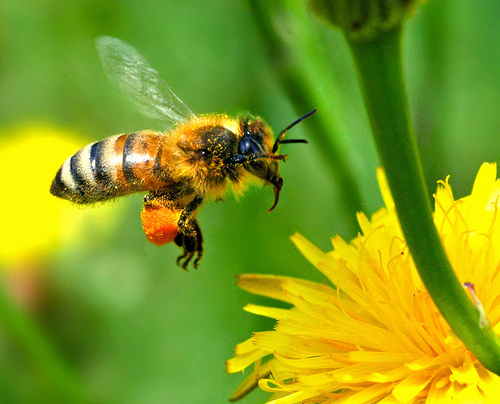
Apis mellifera: Honey Bee
Extreme close up of a bees "tongue"


Apis Millefera, the "honey bearing bee", gathers two things from flowers; nectar (for honey production) and pollen.  The female worker bees suck nectar from the flowers and store it in a little honey stomach as she flies from flower to flower, pollinating as she goes. At first, the nectar is nearly 80% water and the rest is complex sugar chains.  The bees then process this liquid with special enzymes and place little droplets of the converting liquid within the honey comb cells.  The final process is an evaporation process.  The bees maintain an internal hive temperature of approximately 95 degrees F.  They accomplish this by a coordinated effort of fanning their wings.  This forced evaporation results in the thick, viscous liquid gold that we have come to know and love... Honey.


Liquid Gold~ Honey
Honey and Honey Comb


 IS HONEY TRULY GOOD FOR THE SKIN? 
Raw honey, the condensed nectar of flowers, is filled with a vast array health and healing properties.  As with many things when heated to extreme temperatures, as during the process of pasteurization, many of the benefits are greatly changed or even destroyed. We will be discussing "raw" or unpasteurized honey and commenting of the health benefits found with in. 

Raw honey contains an enzyme that when mixed with water, creates hydrogen peroxide. Honey as a mild antiseptic, embodies antibacterial property that can be used to heal minor cuts and scrapes.  Prior to pasteurization,  honey also contains propolis (or bee pollen) as well as other components that stimulate and foster new and healthy skin growth. Coupled with its hygroscopic properties (the ability to obtain moisture from the air and other surroundings), makes honey a very competent natural moisturizer. This enzyme rich, liquid-glory may in fact help prevent and or improve scar tissue, help heal acne abrasions, prevent psoriasis outbreaks and enhance the healing time of minor cuts and burns.

Honey Within the Comb Cells


Honey is a natural at exfoliation.  It contains alpha hydroxy acids, such as gluconic acid, that when applied to skin helps loosen the bonds between the dead skin cells, and strong new skin.  This sloughing off of old skin cells makes the under skin soft and supple.  It provides a glow and radiance  that is found in youthful faces and a softness that bestows health and vitality.  These alpha hydroxy acids also restore elasticity, balance oil production, stimulate collagen production and minimize fine lines and wrinkles. Honey is also filled with antioxidants.  These antioxidants "search" out free radicals that are causing havoc to your skin, and destroys them.  It can reverse the effects of sun and wind damage.  Honey is the neutralizer of ageing quickly and bestows the grace of aging well.

A Spectrum of Honey
Honey comes in many different colors.  The differences you see above are due to the time of year it was collected and the types of flowering plants that the honey bees gathered from.  A beautiful spectrum indeed!

THE HOW TO OF HONEY: 

For Lustrous & Silky Hair:

Combine 1?4- 1/2 c. honey (depending on hair length)
with 1/8- 1/4 c. of virgin coconut oil (room temp in liquid state).
Massage scalp with this conditioning agent and run through strands of hair.  Put on a shower cap for 30 minutes.  Shampoo and rinse as usual.   1-4 times per month depending on desire/condition of hair. 


 Milk and Honey Face Wash: 
                                                     
Warm  (slightly) 1/4 c. milk and add a tbs of raw honey.  Take cotton ball and dip in milk mixture and apply to face liberally.  Repeat until you have used half of your mixture.  *Optional If you have individual blemished you can put a dab of pure raw honey directly on spot site and allow 10 minutes to sit. Finish the remaineder of milk and honey mixture by washing/rinsing the face with it. Using gentile circular motions.  Finish rinse with cool water and pat dry.   Use daily or weekly as desired. 
* honey pulls toxins from skin.  Ocasionally people experience slight bumps for the first few days of this facial cleanse.  These will go away and be replaced with beautiful vibrant skin.  Note: the honey is doing its job!


For body products hand crafted with love and respect please visit: http://www.rechercheorganics.com

Sunday, March 24, 2013

(Goats) Milk: It Does A Body Good!


Capra aegagrus hircus "The Goat"


Goats are one of the oldest domesticated species in the world.  They have been used by humans for their milk, meat, skins and even hair trans-culturally for thousands of years.

Milking
Milking

A healthy female goat, also know as a "doe' or a "nanny" can produce on average 6-8 lbs of milk per day.  That is about 3-4 US quarts (2.83-3.78 liters) at the height of her production. 

What's All the Hype About Goats Milk?
Goats milk has been used since ancient times as a natural cleanser.  It is a superior moisturizer and has excellent emollient properties. The fat in Goats milk is naturally small and well emulsified, meaning the cream is suspended through out the milk instead of raising to the top as one sees in cows milk.  It has short strand protein (compared to cows) which makes it easily absorbed into the skin and hair follicles.  This greater absorption property of fat and protein helps leave the skin soft and supple.
Goats Milk
 The acidity of the human skin is maintained by what is commonly known as the acid mantle, a very thin film on the surface of the skin.  The acid mantle helps keep the skin healthy and acts as a barrier to external bombardment of pathogens such as bacteria and viruses.  Goats milk, and thus products derived from this precious liquid, exhibit pH that is closer to the natural pH of human skin.  When applied to the skin, the milks similar pH is not seen as invasive, reduces the surface tension of the dermal layers and allows for even greater absorption and moisturizing effects to take place.  This is of particular importance to people with sensitive or delicate skin. Alpha hydroxy acids are found with in goats milk as well.  This is a naturally exfoliating agent that penetrates the epidermis and upper dermis to achieve exfoliation (sloughing off of old skin cells).  Exfoliation stimulates the skin and healthy cells are regenerated.  The effect reduces visible aging leaving the skin smoother and and softer with overall lessening of fine wrinkles and skin discoloration.  Hydroxy acids are also used to improve scaling on sun damaged skin.  It also has proven a benefit to acne infected skin surfaces, and to people with eczema and psoriasis.   Goats milk also contains vitamin A (about 47% more than cows milk), several of the B vitamins including riboflavin, niacin, B6 and B12, vitamin E, calcium, as well as caprylic acid (anti-fungal) and capronic acids.  All of this naturally feeds the skin, delivering this host of nutrients to your awaiting cells.
Like Cleopatra...


It is said that Cleopatra, Queen of Egypt, bathed in the milk of goats to maintain her beautifully smooth and glowing skin...
 There are many products on the market today that tout this natural  and luxurious ingredient.  They can be found at local farmers markets, in high end spas and boutiques, and through out the isles of your local grocers. We recommend checking out http://www.rechercheorganics.com for many more epicurean goats milk products.


TEST:
If you think that the soap you are using may be causing your dry skin, you can easily test it yourself! First, purchase pH testing strips.  Then, take your soap, add a small amount of water to the side and rub gently to create a small amount of lather.  Press the test strip into the lather and match the resulting color to the pH scale that comes with the strips.  Healthy skin maintains a pH in the range of about 4.5 to 6.0 on the pH scale.  The closer your soap is to this level, the more gentle and non stripping to your skin and its natural defense layers it will be.

What goats milk products are you familiar with and use? We would love to hear from you!